Copán
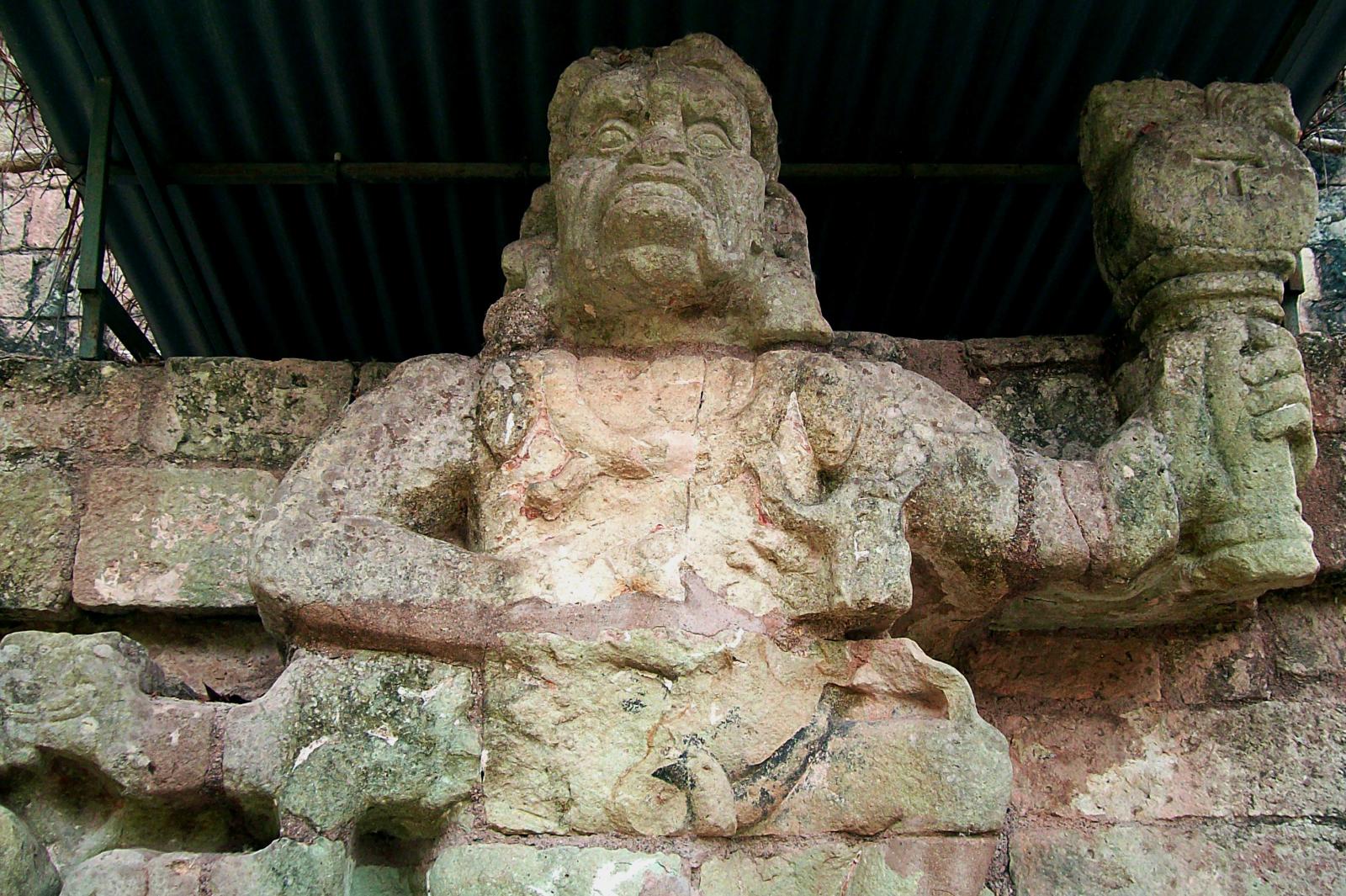
Photo: Adalberto Hernandez Vega from Copan Ruinas, Honduras, CC BY 2.0, via Wikimedia Commons
Copán stands as one of the most important Maya archaeological sites, located in a fertile mountain valley at 600 meters (1,970 feet) above sea level in western Honduras. The ruined citadel and imposing public squares reveal three main stages of development before the city was abandoned in the early 10th century. A significant portion of the eastern acropolis was eroded away by the Copán River, which has since been diverted to protect the remaining structures. The site showcases the southeasternmost extent of Maya civilization, positioned on the frontier with non-Maya peoples and representing over two thousand years of continuous occupation.
Timeline
Copán emerges as a major Classic period Maya kingdom
King Uaxaclajuun Ub'aah K'awiil captured and executed by Quiriguá ruler, beginning 17-year hiatus
City abandoned during Maya collapse
Archaeological excavations begin
Designated UNESCO World Heritage Site
Honduran Government declares site a cultural monument
What the Show Claims
- ›Maya astronomical and mathematical knowledge suggests possible extraterrestrial guidance in their discoveriesS20E11
From the Transcripts
“Starting around 800 AD, their sacred sites were abandoned, one after the other. Palenque. Copán. Naranjo. And then, finally, Tikal.”
What Archaeology Says
Archaeological investigations, which didn't begin until the 19th century, have revealed Copán as the capital of a powerful kingdom that ruled a vast territory within the southern Maya area from the 5th to 9th centuries AD. The city developed a distinctive sculptural style within the lowland Maya tradition, perhaps to emphasize the Maya ethnicity of its rulers despite being surrounded by non-Maya peoples.
Excavations have uncovered detailed hieroglyphic inscriptions that allow archaeologists and epigraphers to reconstruct the city's historical record spanning most of the Classic period. The site is particularly renowned for its sophisticated artistic achievements, astronomical observations, and mathematical knowledge. The ruins showcase imposing public squares and a complex acropolis that demonstrates advanced urban planning and architectural expertise.
The scientific consensus recognizes Copán's political importance and cultural sophistication, with researchers documenting how the city suffered a major disaster in AD 738 when its greatest king was captured and executed by a former vassal. This defeat led to a 17-year period of decline during which Copán may have been subject to Quiriguá. While much has been learned about Maya achievements in astronomy and mathematics at Copán, the full extent of their knowledge and the methods by which they acquired such sophisticated understanding continues to fascinate researchers.
What remains genuinely intriguing is how the Maya at Copán achieved such precise astronomical calculations and mathematical concepts, including their understanding of zero and complex calendar systems. The relationship between their scientific achievements and their cultural and religious practices continues to be studied, with ongoing research revealing new insights into this remarkable civilization's capabilities.
Mysteries & Fun Facts
The Copán River eroded away a significant portion of the eastern acropolis before being diverted to protect the remaining structures
King Uaxaclajuun Ub'aah K'awiil was captured and executed by his former vassal in 738 AD, causing a 17-year political crisis
The site represents the southeasternmost extent of Maya civilization, surrounded by non-Maya peoples
Copán was continuously occupied for more than two thousand years, from the Early Preclassic to the Postclassic period
Planning a Visit
Copán is generally accessible to visitors and remains one of Honduras' most important tourist destinations. The site offers well-maintained paths through the ruins, allowing visitors to explore the imposing public squares, hieroglyphic stairway, and remaining structures of the ancient acropolis. Check with local tourism authorities for current visiting hours and guided tour availability.
Copán Ruinas town is adjacent to the archaeological site, with San Pedro Sula approximately 160 kilometers away.
The dry season from November to April typically offers the most comfortable weather for exploring the site. During these months, visitors can expect clearer skies and less rainfall, making it easier to navigate the outdoor archaeological areas.
Featured Locations4 sites within this area
Copán Hieroglyphic Stairway, Copán
HondurasRosalila Temple (beneath Temple 16, Copán)
HondurasStela C, Copán
HondurasCopán Archaeological Site
HondurasRelated Sites
Chichen Itza - Kukulkan Temple
Another major Maya site known for astronomical alignments and mathematical precision that Ancient Aliens explores
Palenque
Fellow Classic period Maya city-state with sophisticated hieroglyphic inscriptions and architectural achievements
Tulum
Maya coastal site that demonstrates the civilization's continued astronomical and architectural knowledge into later periods
Also Covered In
Featured In1 episodes
Historical data sourced from Wikipedia