Loch Ness
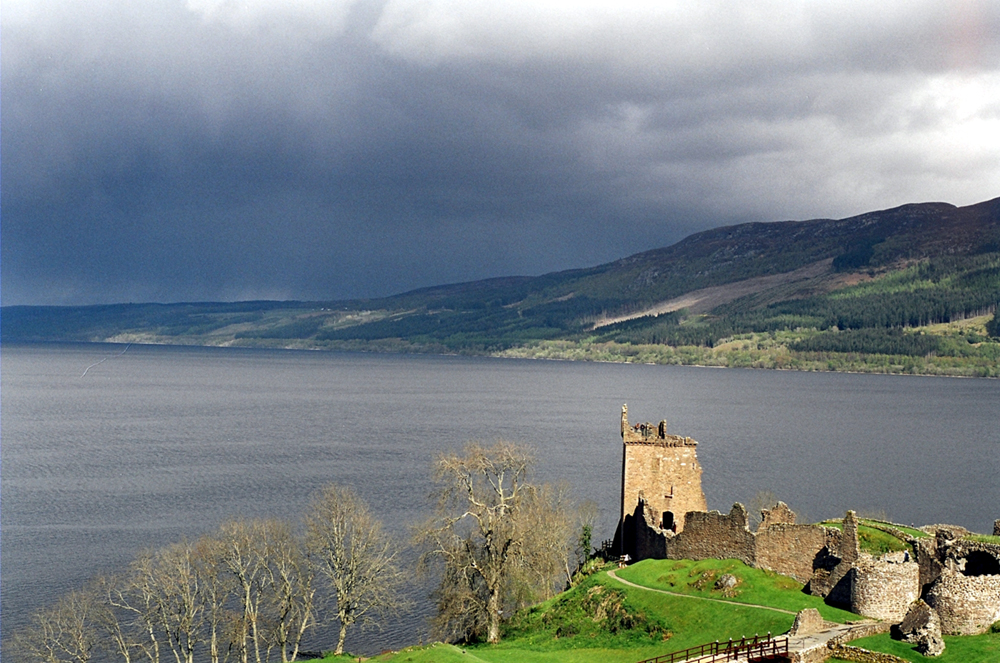
Photo: Sam Fentress, CC BY-SA 2.0, via Wikimedia Commons
Loch Ness is a large freshwater loch stretching along the Great Glen Fault in the Scottish Highlands, taking its name from the River Ness that flows from its northern end. The loch is one of the largest in Scotland and Great Britain, with the greatest volume of any Scottish loch and ranking as the second-deepest and second-largest by surface area. Located approximately 10 kilometers southwest of Inverness, the loch extends southward to Fort Augustus and forms part of the Caledonian Canal system that connects the Moray Firth to Loch Linnhe on the west coast. The loch's basin was carved by glacial erosion along the geological line of weakness created by the Great Glen Fault, which also formed the neighboring lochs Lochy and Oich. While famous worldwide for the legendary Nessie sightings, the loch remains a stunning example of Scotland's dramatic Highland geography. Ancient Aliens has explored the possibility that the legendary Loch Ness Monster could represent extraterrestrial entities sheltering in Earth's deep waters, drawing parallels to extremophile organisms discovered in space environments. However, scientific investigations including sonar surveys and environmental studies have yielded no physical evidence of an unknown large creature in the loch, while the modern "monster" phenomenon itself traces to a widely-publicized but unverified newspaper account from the 1930s. The enduring appeal of the Nessie legend reflects humanity's fascination with mystery, even as geological and biological evidence points toward the loch as a remarkable natural formation shaped by glacial forces rather than a refuge for undiscovered life.
Timeline
Great Glen Fault carved by glacial erosion, forming the basin that would become Loch Ness
Caledonian Canal completed, incorporating Loch Ness into the waterway linking Scotland's east and west coasts
Modern Loch Ness Monster legend begins following newspaper reports of sightings
What the Show Claims
- ›The legendary Loch Ness Monster may be evidence of extraterrestrial entities taking refuge in Earth's waters rather than a purely mythological creatureS10E07
- ›Giant creatures like the Loch Ness Monster could represent alien life forms hiding beneath the seas, given the discovery of sea life surviving in spaceS10E07
Theorist Takes
“Henry: One wonders if this is evidence of a portal that this creature was opening up, and, in fact, if this creature and the Loch Ness Monster are part of the same family of creatures that travel the world through these portals or gateways.”
From the Transcripts
“Henry: The story of the Loch Ness Monster reminds me of a UFO sighting that happened north of Nashville back in the '90s.”
What Archaeology Says
Unlike many ancient sites, Loch Ness itself has not been the subject of traditional archaeological excavation, as it is a natural geological formation rather than a human-made structure. However, the loch has been extensively studied through scientific surveys and sonar investigations, particularly since the 1930s when the modern Nessie legend took hold. Multiple sonar sweeps, underwater photography expeditions, and comprehensive biological surveys have been conducted over the decades.
The most significant scientific investigations have focused on the loch's ecosystem and geological structure rather than searching for cryptozoological evidence. Researchers have mapped the loch's considerable depth and documented its fish populations, water chemistry, and sediment layers. These studies have revealed a typical Highland freshwater ecosystem with no evidence supporting the existence of large unknown creatures.
The scientific consensus regarding the Loch Ness Monster is clear: there is no credible physical evidence for any large, unknown creature inhabiting the loch. Numerous claimed sightings have been investigated and attributed to misidentification of common objects, optical illusions, or deliberate hoaxes. The famous 1934 "Surgeon's Photograph" was later revealed to be a staged hoax using a toy submarine.
What remains genuinely intriguing is the cultural phenomenon itself - how a relatively remote Scottish loch became the focus of one of the world's most enduring cryptozoological legends. The psychological and sociological aspects of the Nessie phenomenon continue to fascinate researchers studying how modern myths develop and persist in the age of scientific skepticism.
Mysteries & Fun Facts
Loch Ness contains more water than all the lakes in England and Wales combined
The loch is part of the Great Glen Fault system, a major geological feature that cuts across the Scottish Highlands
Despite its fame for monster sightings, the loch supports a typical Highland ecosystem including salmon, trout, and eels
The Caledonian Canal allows boats to travel from the North Sea to the Atlantic Ocean via Loch Ness
Planning a Visit
Loch Ness is easily accessible to visitors, with the main A82 road running along the western shore between Inverness and Fort William, passing through the villages of Drumnadrochit and Invermoriston. Visitors can explore the loch by car, on foot along various walking trails, or by taking boat tours that operate from several points along the shoreline.
Inverness, approximately 10 kilometers northeast
Late spring through early autumn offers the best weather and longest daylight hours for exploring the loch and surrounding Highlands. Summer months can be busier with tourists but provide the warmest temperatures and clearest views across the water.
Related Sites
Callanish Stones / Scottish Sites
Both represent iconic Scottish locations featured on Ancient Aliens for their mysterious and unexplained phenomena
Avebury Stone Circle
Another site where Ancient Aliens explores unexplained phenomena and possible extraterrestrial connections in the British Isles
Roswell
Both locations are famous for alleged encounters with unexplained phenomena that the show suggests may have extraterrestrial origins
Also Covered In
Featured In1 episodes
Historical data sourced from Wikipedia