Inca Trail
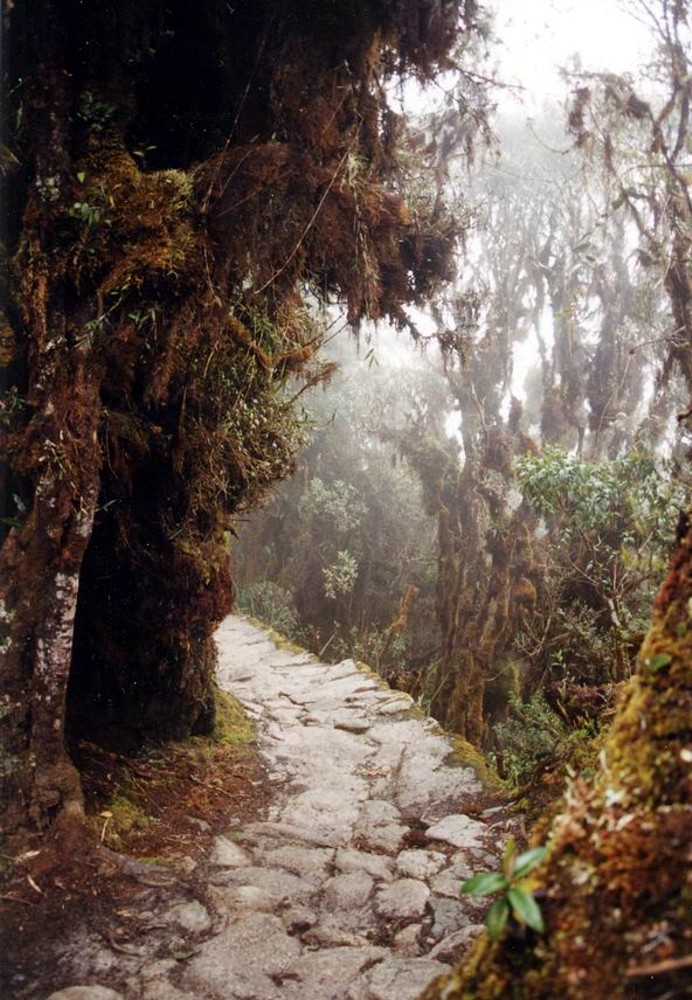
Photo: Unknown, Public domain, via Wikimedia Commons
The Inca Trail to Machu Picchu is an ancient network of stone-paved pathways that winds through Peru's dramatic Andes mountains, culminating at the iconic citadel of Machu Picchu. This remarkable hiking route consists of three overlapping trails — Mollepata, Classic, and One Day — with the two longer routes requiring an ascent beyond 4,200 metres (13,800 feet) above sea level. The trail passes through diverse Andean environments including cloud forest and alpine tundra, showcasing the Incas' mastery of high-altitude construction. Along the route, hikers encounter numerous Inca settlements, tunnels carved through solid rock, and ceremonial sites before reaching the dramatic Sun Gate entrance to Machu Picchu. Today, this ancient pathway serves as one of South America's most sought-after trekking experiences, offering visitors a chance to literally walk in the footsteps of the Inca.
Timeline
Construction of the Inca Trail network begins during the height of the Inca Empire
Trail system completed as part of the extensive Inca road network spanning the empire
Hiram Bingham's expedition to Machu Picchu brings international attention to the trail
Modern trekking route established, making the ancient pathway accessible to international visitors
What the Show Claims
- ›The Inca Trail's precise engineering and alignment with astronomical events indicate possible extraterrestrial influence on Inca construction techniquesS17E01S21E01
- ›The path's sophisticated route planning is presented as evidence of advanced knowledge beyond typical human capabilities of the timeS17E01S21E01
What Archaeology Says
Archaeological investigations of the Inca Trail have revealed the extraordinary sophistication of Inca engineering and surveying techniques. The trail network represents one of the most impressive examples of pre-Columbian road construction in the Americas, with carefully fitted stone blocks creating durable pathways that have survived centuries of Andean weather. Researchers have documented how Inca engineers masterfully adapted their construction to the challenging mountain terrain, creating drainage systems, retaining walls, and strategic rest stations that demonstrate advanced understanding of logistics and environmental conditions.
Excavations along the route have uncovered numerous way stations, storage facilities, and ceremonial sites that supported the movement of people and goods across the empire. These archaeological findings reveal the trail's dual purpose as both a practical transportation route and a sacred pathway leading to the holy city of Machu Picchu. The precision of stone cutting and fitting techniques continues to impress modern engineers, with blocks fitted so tightly that a knife blade cannot be inserted between them.
The scientific consensus attributes the trail's construction to sophisticated Inca knowledge of surveying, astronomy, and engineering, developed through centuries of mountain civilization. However, some aspects of Inca construction techniques remain incompletely understood, particularly the methods used to transport and precisely position massive stone blocks at high altitude. While the trail's astronomical alignments are well-documented, debates continue about the full extent of Inca astronomical knowledge and its integration into their architectural planning.
Ongoing archaeological work continues to reveal new insights about the trail's construction sequence and the broader Inca road network. Recent studies using modern surveying techniques have confirmed the remarkable precision of the original Inca engineering, while also revealing previously unknown sections and connecting pathways that demonstrate the true scope of this ancient transportation system.
Mysteries & Fun Facts
The trail includes over 100 archaeological sites along its route, making it one of the world's most ruin-rich hiking experiences
Inca engineers built the trail without wheels, iron tools, or beasts of burden, relying entirely on human labor and bronze implements
The highest point on the trail, known as Dead Woman's Pass, reaches 4,215 meters (13,829 feet) above sea level
The trail features original Inca tunnels carved directly through solid rock outcroppings
Planning a Visit
The Inca Trail is generally accessible to visitors through organized trekking groups, though permits are required and should be booked well in advance due to limited daily quotas. The classic four-day trek requires moderate to good physical fitness due to high altitude and challenging mountain terrain. Visitors should expect dramatic scenery, ancient ruins, and the unforgettable experience of approaching Machu Picchu through the Sun Gate as the Incas once did.
Cusco, approximately 75 kilometers away and serving as the primary departure point for Inca Trail expeditions.
The dry season from May to September offers the most favorable weather conditions for trekking, with clear skies and minimal rainfall. The trail is typically closed during February for maintenance, and the wet season from December to March can present challenging conditions with muddy paths and limited visibility.
Related Sites
Machu Picchu
The Inca Trail terminates at Machu Picchu, making these sites intimately connected as destination and pathway
Sacsayhuaman
Sacsayhuaman demonstrates similar precision stone-fitting techniques and advanced Inca engineering capabilities
Ollantaytambo
Ollantaytambo served as another major Inca fortress complex showcasing the same sophisticated construction methods found along the trail
Also Covered In
Featured In2 episodes
Historical data sourced from Wikipedia