Stonehenge
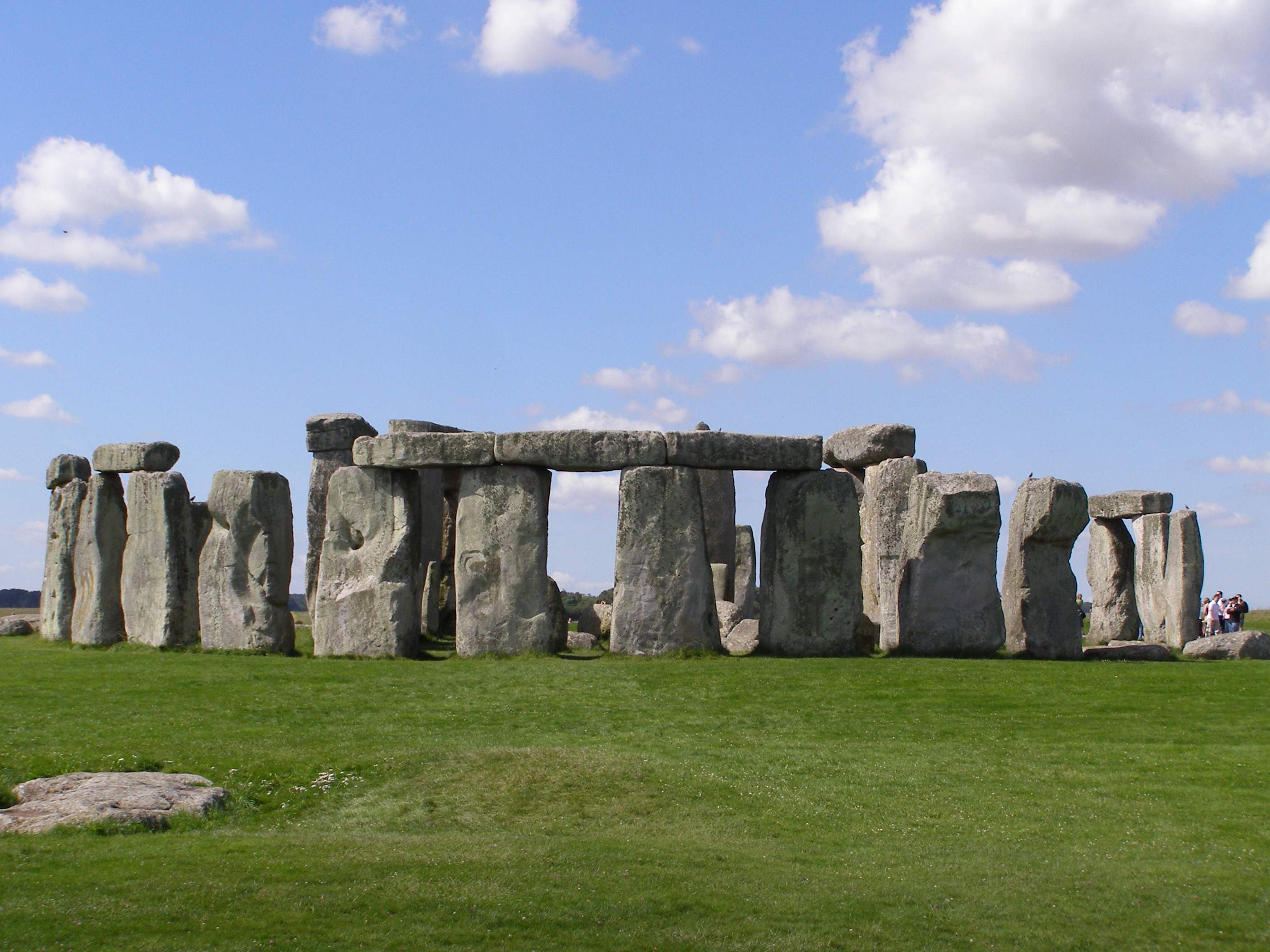
Photo: garethwiscombe, CC BY 2.0, via Wikimedia Commons
Stonehenge is a prehistoric megalithic structure on Salisbury Plain in Wiltshire, England, consisting of an outer ring of massive sarsen stones each around 13 feet high and weighing approximately 25 tons, topped by horizontal lintel stones secured with mortise and tenon joints. Inside this outer circle lies a ring of smaller bluestones and free-standing trilithons—pairs of vertical stones capped by a single lintel. The monument is precisely aligned to capture the sunrise on the summer solstice and sunset on the winter solstice, demonstrating sophisticated astronomical knowledge. Today visitors see the weathered remains of what was once a complete stone circle, set within ancient earthworks in the densest complex of Neolithic and Bronze Age monuments in England. The site's iconic silhouette against the Salisbury Plain has made it one of Britain's most recognizable landmarks and a powerful symbol of prehistoric achievement.
Timeline
Construction begins with the digging of the circular earthwork bank and ditch
Earliest bluestone placement and first human burials at the site
Major construction phase: massive sarsen stones erected in the famous circle configuration
Bluestones repositioned into their current arrangement within the sarsen circle
Final construction phase completed, monument reaches its ultimate form
Becomes legally protected under the Ancient Monuments Protection Act
Inscribed as UNESCO World Heritage Site
What the Show Claims
- ›Bluestone circle served as an alien portal to transport beings to the starsS03E03S14E17
- ›Builders of Stonehenge mysteriously vanished after completionS02E08
- ›Bluestones transported 150+ miles from Wales — impossible without alien technologyS14E17S18E02
- ›Astronomical alignments encode alien mathematical knowledgeS02E08S03E03S17E02
- ›Site sits on a nexus of ley lines — alien energy gridS21E15
From the Transcripts
“Stonehenge is essentially an ancient astronomical observatory. Guess it may have been used for ritualistic purposes. It may have been used for religious purposes. But it's very clear that it was also used for astronomical purposes, for observations.”
What Archaeology Says
Archaeological investigations at Stonehenge have revealed a complex construction history spanning over 1,500 years. Excavations show the site began around 3100 BC as a simple circular earthwork—a bank and ditch known as a henge—with evidence of cremated human remains suggesting it served as a cemetery from its earliest phase. The famous standing stones came much later, with the massive sarsen stones erected between 2600-2400 BC during the monument's most ambitious construction phase.
The transportation of the bluestones from the Preseli Hills in Wales, located over 150 miles away, represents one of archaeology's most fascinating logistical puzzles. Recent research suggests a combination of natural glacial movement and human ingenuity using wooden sledges, rafts, and possibly rollers could explain this remarkable feat. Geologists have identified the specific quarry sites in Wales, while experimental archaeology has demonstrated that teams of people could indeed move such massive stones using period-appropriate technology.
Scientific analysis has confirmed Stonehenge's primary function as an astronomical observatory and ceremonial center. The monument's precise alignment with solar events, particularly the summer and winter solstices, indicates its builders possessed sophisticated understanding of celestial cycles. Radiocarbon dating of cremated remains shows the site was used for burials over at least 500 years, suggesting it held profound spiritual significance for successive generations.
Despite decades of research, significant mysteries remain. The exact methods used for the most challenging aspects of construction—such as raising the massive trilithons and achieving the precise astronomical alignments—are still debated among researchers. The specific rituals performed at the site and the identity of the various groups who built and used Stonehenge over the centuries continue to intrigue archaeologists and spark new research initiatives.
Mysteries & Fun Facts
The mortise and tenon joints holding the lintel stones in place represent a woodworking technique applied to massive stone construction—unique among prehistoric monuments
Cremated remains of approximately 150 individuals have been discovered at the site, making it one of the largest prehistoric cemeteries in Britain
The site sits within a landscape containing over 400 burial mounds and other ancient monuments, creating the densest concentration of prehistoric sites in England
Each of the outer sarsen stones weighs approximately 25 tons and required an estimated 600 people to transport using Neolithic technology
Planning a Visit
Stonehenge is easily accessible to visitors with a dedicated visitor center and shuttle service to the stone circle. Advance booking is strongly recommended, especially during summer months and around the solstices when the site experiences peak visitation.
Salisbury, approximately 8 miles southeast
Early morning or late afternoon visits offer the best lighting for photography and smaller crowds. Winter months provide clearer views with fewer tourists, though weather can be unpredictable on Salisbury Plain.
Featured Locations9 sites within this area
Wiltshire countryside (Stonehenge, Avebury, Silbury Hill, West Kennet Long Barrow area)
United KingdomJulia Set Crop Formation (field opposite Stonehenge)
United KingdomStonehenge, Wiltshire, England
United KingdomStonehenge Region UFO Activity
United KingdomAncient Aliens claims that from ancient sites like Stonehenge to modern UFO sightings, Great Britain is a destination for extraterrestrial visitors throughout history.
Durrington Walls Superhenge
United KingdomWoodhenge
United KingdomWinterbourne Stoke Barrow
United KingdomSalisbury Plain, Wiltshire, England
United KingdomWarminster
United KingdomRelated Sites
Avebury Stone Circle
Another massive Neolithic stone circle in Wiltshire, demonstrating the region's importance in prehistoric monument building
Carnac Stones
Megalithic stone alignments in France that share similar construction challenges and possible astronomical purposes
Gobekli Tepe
Earlier megalithic temple complex that predates Stonehenge and shows sophisticated prehistoric astronomical knowledge
Also Covered In
Featured In6 episodes
Historical data sourced from Wikipedia